Places & Landmarks

Kazbegi's Iconic Attractions

A curated guide to the places that define Kazbegi — from its glacier-shadowed peaks and medieval churches to remote valleys and dramatic gorges.

Landmark #1 Must See

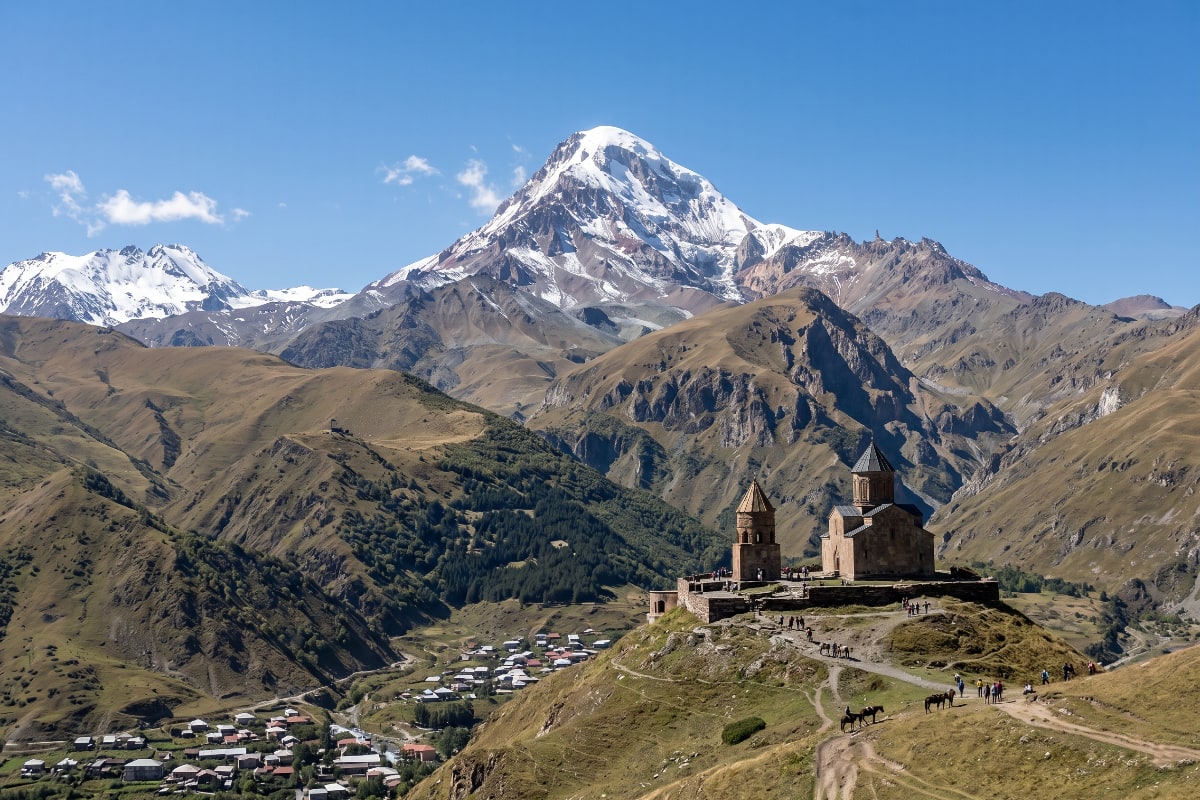
Gergeti Trinity Church

Rising from a rocky promontory at 2,170 metres above sea level, the 14th-century Tsminda Sameba (Holy Trinity) Church is one of the defining images of Georgia. Its silhouette against the snow-capped mass of Mount Kazbek has become iconic across photography, travel literature, and Georgian national identity alike.

The church was built in the 14th century and served as a safekeeping site for Georgian royal treasures during invasions. The interior is simple — stone walls, frescoes worn by time, and the smell of beeswax candles — precisely the kind of sacred quietness that makes the place feel meaningful regardless of one's beliefs.

Elevation

2,170 m

Era

14th C.

Accessible by footpath (4–5 hrs round trip) or 4×4 vehicle from Stepantsminda
Open year-round when weather permits. Dress modestly — shoulders and knees covered required
Free to enter — donations to the church community are welcome
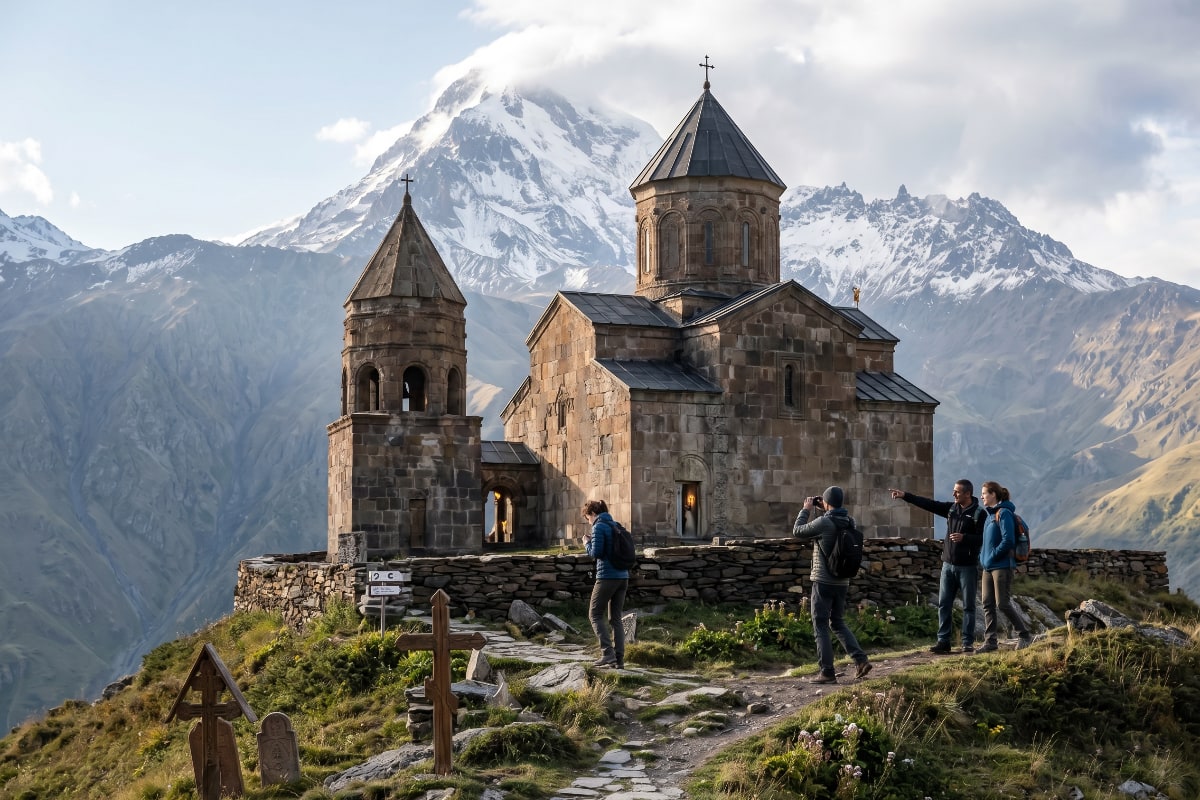
Gergeti Trinity Church silhouetted against a dramatic cloudy sky with Mount Kazbek behind

More to Explore

All the Places Worth Knowing in Kazbegi

Mount Kazbek summit rising above the cloud line
Summit5,047 m

Mount Kazbek

Georgia's third-highest peak and one of the iconic summits of the Greater Caucasus. For non-climbers, the approach to Bethlemi Monastery Hut (3,650m) offers extraordinary glacier scenery without technical climbing. For experienced alpinists, the summit route is a serious but non-technical high-altitude objective typically done in 2 days with acclimatization.

2-day summit attempt for climbers Bethlemi Hut accessible for trekkers Guide essential above hut
Valley~40 km from town

Truso Valley

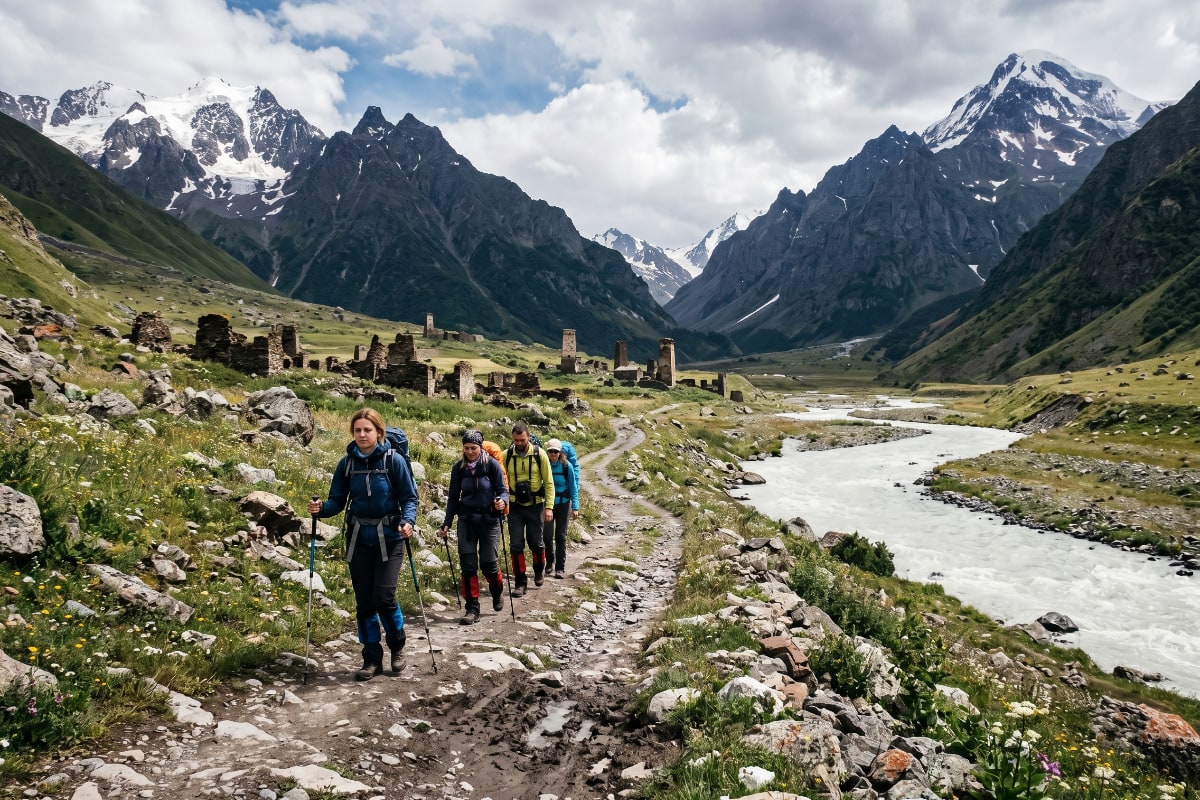
Among the most visually arresting landscapes in the entire Caucasus. The Truso Valley features travertine mineral springs that have created unearthly pools of orange-tinted water along the valley floor, alongside ruined hilltop forts, abandoned Georgian and Ossetian villages, and close-range views of the Kazbek glacier system. Accessible only by 4×4 vehicle along the Terek River road — typically a half-day or full-day excursion organized from Stepantsminda.

The valley runs near the border with North Ossetia — no permit is required for the normal tourist route, but respect the boundary markers and always travel with a local driver familiar with current conditions.

4×4 access only June–October best Local guide recommended
Truso Valley's mineral springs with orange travertine formations
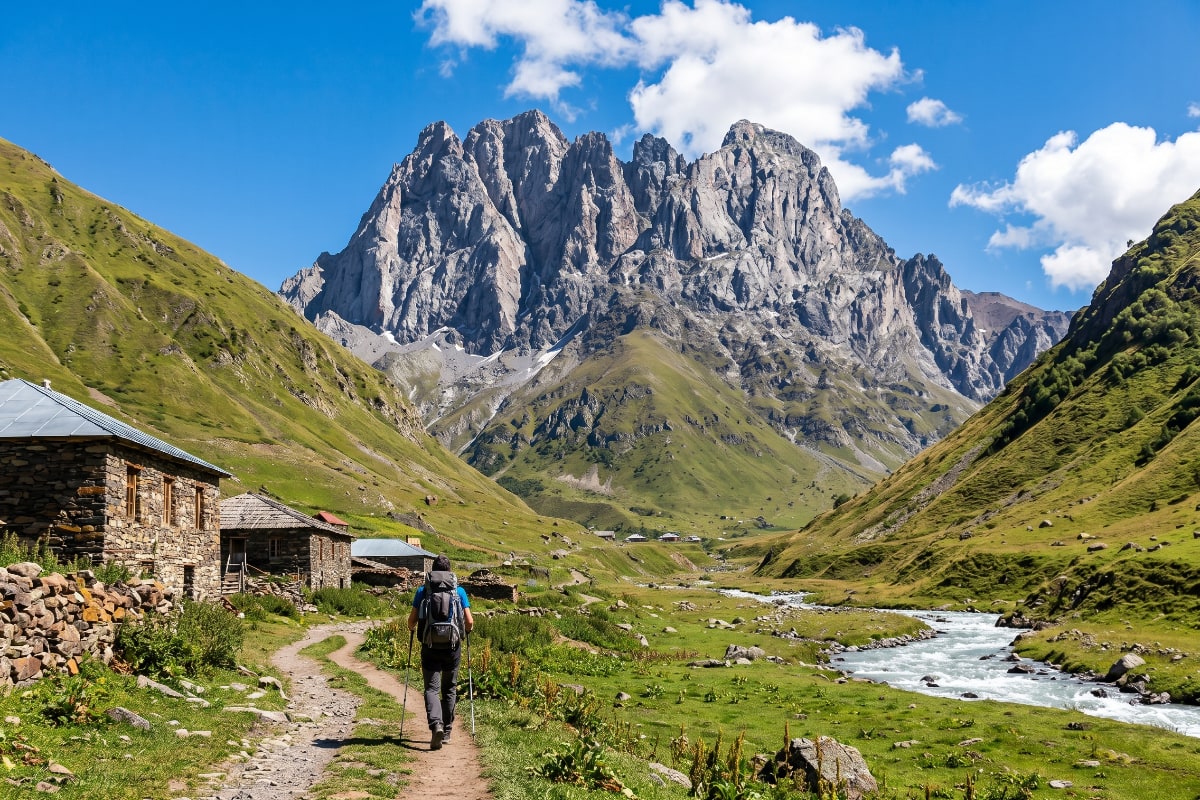
The rocky Chaukhi Massif towering above Juta Valley
Trekking Valley~25km from Stepantsminda

Juta Valley & Chaukhi Massif

A remote highland village at 2,180m and the gateway to some of the most dramatic trekking terrain in the region. The Chaukhi Massif beyond Juta is sometimes called "the Georgian Dolomites" — a fair comparison, given the vertical granite towers rising from the alpine plateau. The turquoise Abudelauri Lakes sit between the peaks at nearly 3,000m.

Drive to Juta first (~1 hr) 6–9 hrs round trek Camping possible at lakes
GorgeOn Georgian Military Highway

Dariali Gorge & Monastery

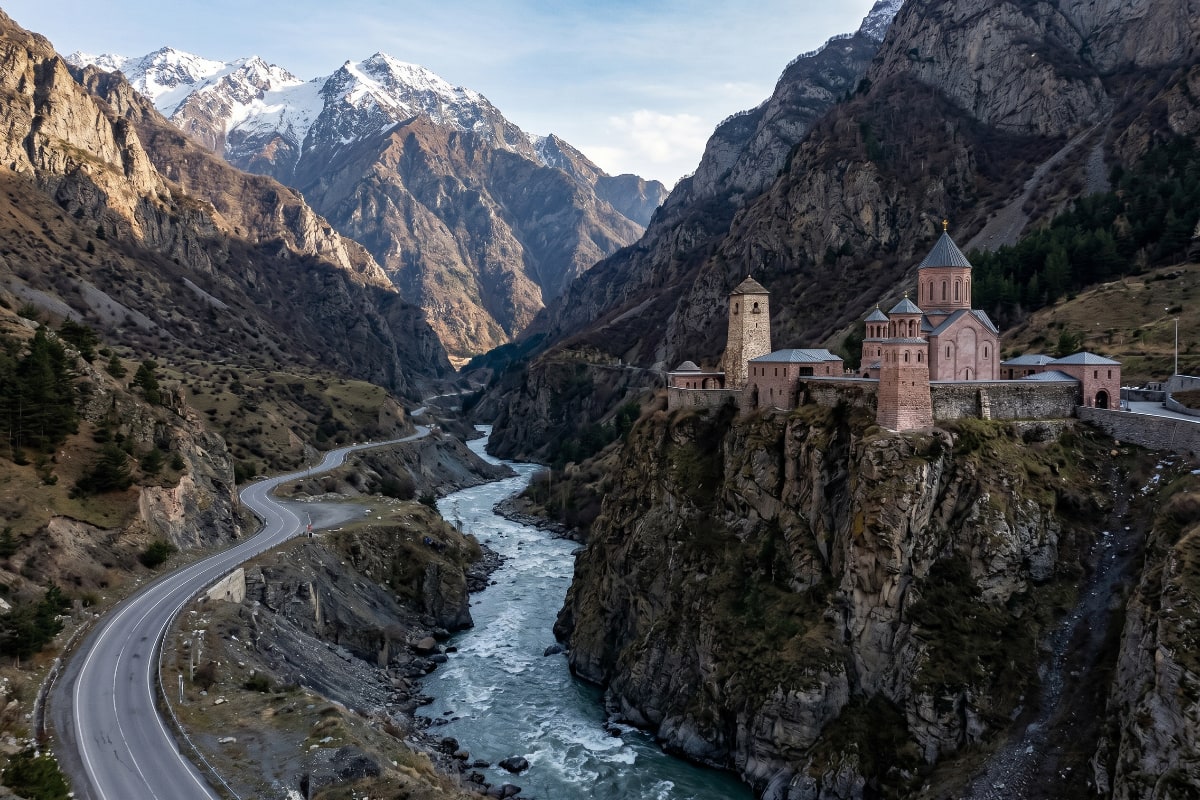
The natural gateway to Kazbegi. The Dariali Gorge is where the Terek River has carved a narrow corridor through the Caucasus ridgeline for millennia — the same route used by Alexander's armies, Silk Road caravans, and the modern Georgian Military Highway. The towering limestone walls on either side create an almost theatrical sense of entering another world.

At the gorge entrance stands the Dariali Monastery, a relatively modern Orthodox monastic complex built adjacent to a medieval site, set dramatically at the base of a near-vertical cliff face. Worth a brief stop on the drive from Tbilisi.

On route from Tbilisi Easy roadside stop All vehicles
Dariali Gorge with steep limestone walls and the rushing Terek River below

Also Worth Visiting

Additional Highlights Around Kazbegi

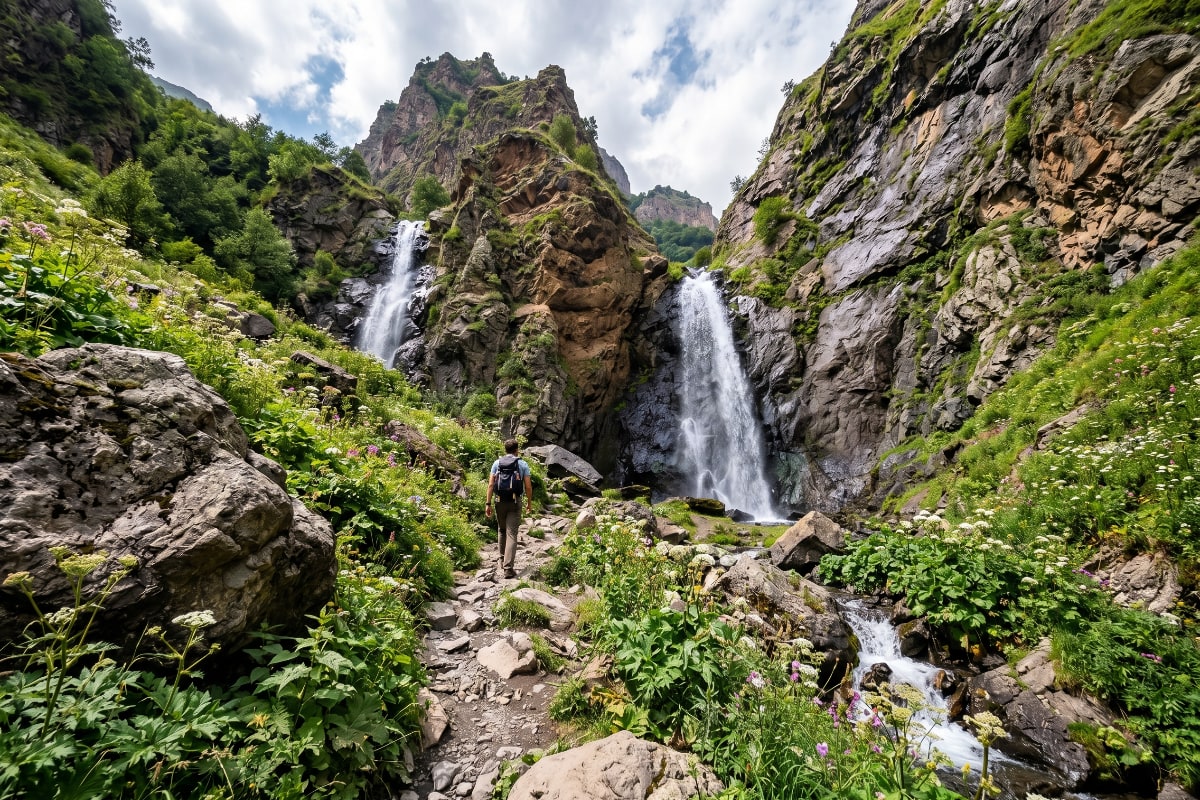
Gveleti waterfall in a forested mountain gorge
Waterfall

Gveleti Waterfalls

Two accessible waterfalls — 20m and 40m — reachable on a gentle 2–3 hour walk from town. Perfect for an afternoon excursion.

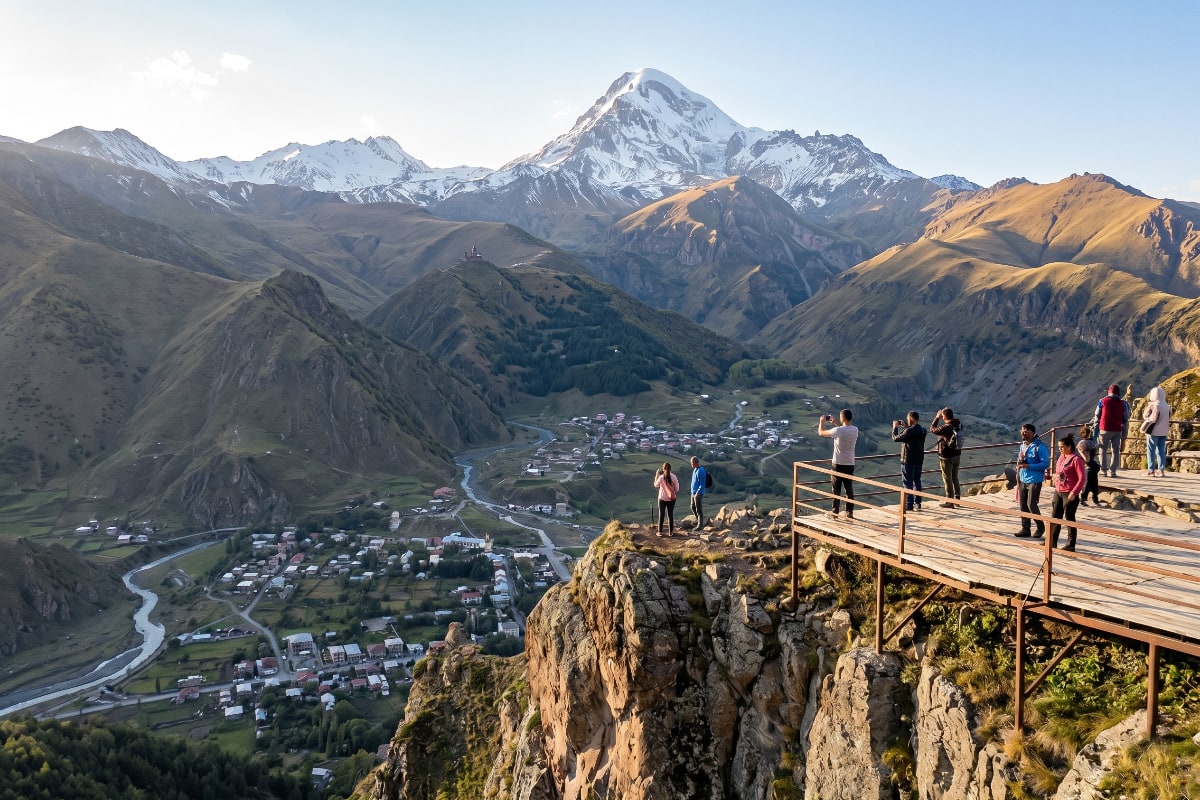
Panoramic viewpoint above Stepantsminda town
Viewpoint

Stepantsminda Viewpoints

Multiple hillside vantage points within walking distance of town, facing Mount Kazbek and Gergeti Church. Best at golden hour for photography.

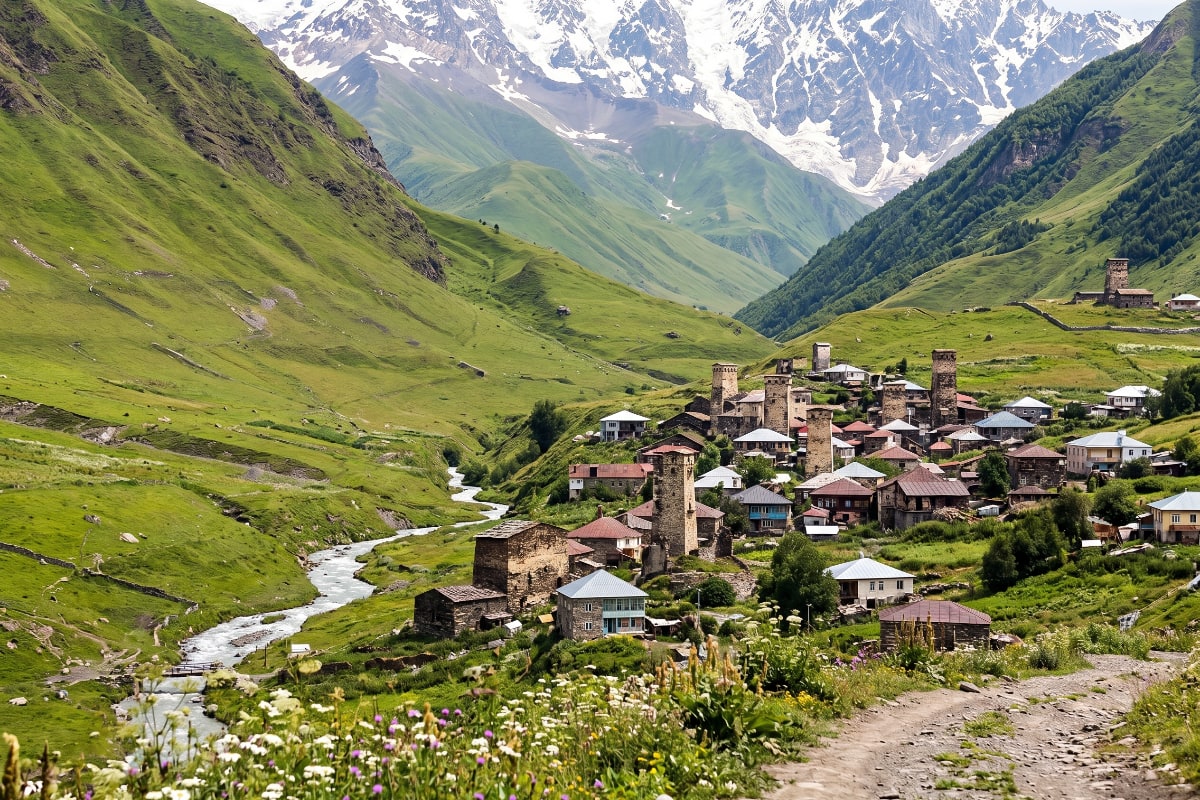
Traditional watchtower from the medieval era in Kazbegi region
Heritage

Sno Valley & Towers

The broad Sno Valley east of town features medieval defensive towers, traditional stone architecture, and sweeping views of the high ranges.

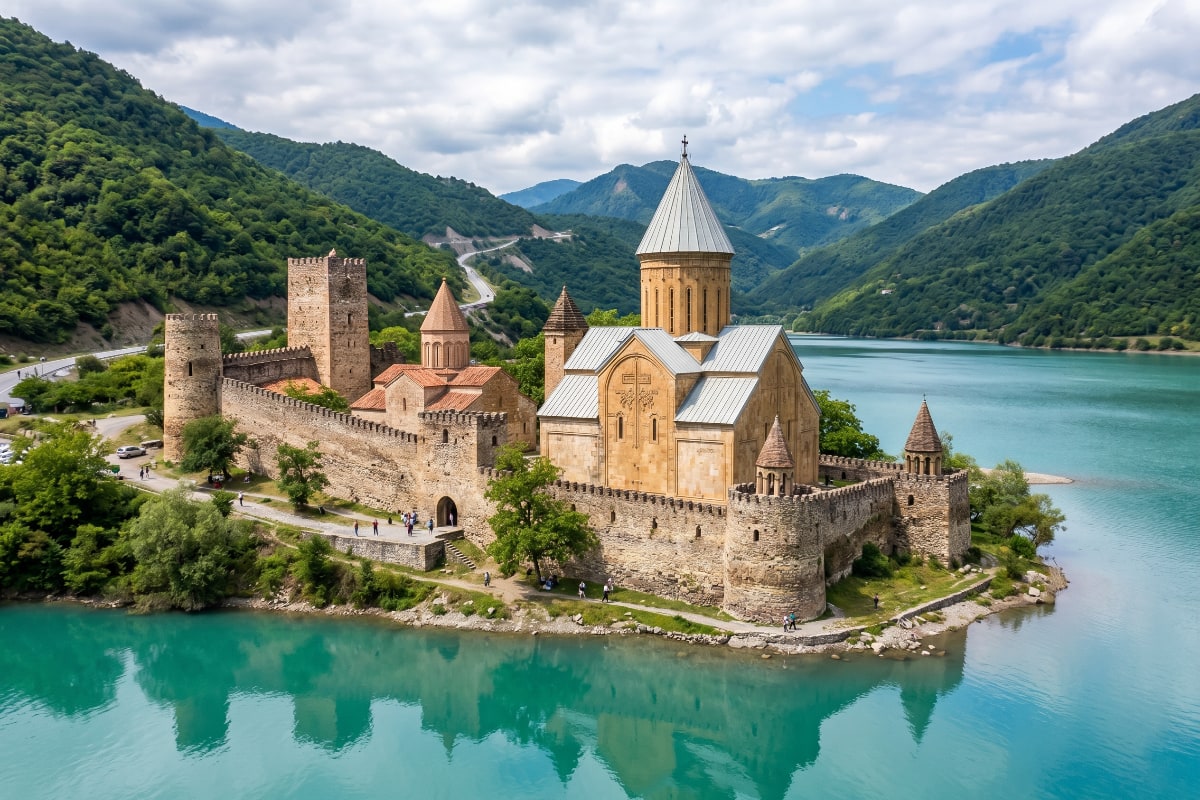
Ananuri Fortress reflected on Zhinvali Reservoir
Road Stop

Ananuri Fortress

A 16th-century river fortress perched above the turquoise Zhinvali Reservoir. A natural stop on the Military Highway between Tbilisi and Kazbegi.

Before You Visit

Visitor Notes & Practical Guidance

Kazbegi's major attractions are spread across a significant geographic area. Some, like Gergeti Church, are within walking distance of town. Others — Truso Valley, Juta, the upper glaciers of Mount Kazbek — require dedicated transport, time, and preparation.

Reaching Remote Valleys

Truso Valley and the road to Juta Village are not accessible with standard passenger vehicles. Roads are rough, involve river crossings, and can change status after rainfall. Always hire a local 4×4 from Stepantsminda rather than attempting these routes with a rental car.

Photography Etiquette

Gergeti Trinity Church is a deeply important religious site. While photography is generally permitted on the exterior and surrounding hilltop, photographing inside the church is not always welcome, especially during services. Exercise discretion and always ask first.

Seasonal Access

Most attractions are accessible from June to October. Winter transforms the valley and makes Gergeti dramatically beautiful, but 4×4 vehicles and snow chains become essential, and some routes close entirely. The road through Dariali Gorge (Georgian Military Highway) remains generally open year-round except in severe weather.