Understanding Kazbegi
Everything you need to understand the landscape, character, culture, and spirit of Georgia's most dramatic highland region.
Overview
Kazbegi is the name of both a municipality in northeast Georgia and a small mountain town — officially called Stepantsminda — that sits at the northern end of the Khevi region, approximately 148km from Tbilisi along the Georgian Military Highway. The surrounding area is part of the Greater Caucasus mountain range, and the landscape is defined almost entirely by its extraordinary elevation and geological scale.
The municipality covers some of the most dramatic terrain in the Caucasus — glacier systems, high alpine meadows, river gorges, and stone valleys — while the town of Stepantsminda itself is a small and quiet community of a few thousand residents, most of whom work in agriculture, pastoralism, or increasingly, tourism.
Above the town, at 2,170 metres, sits the Gergeti Trinity Church — a medieval landmark whose silhouette against Mount Kazbek (5,047m) has become the defining image of Georgian mountain identity. Below, the rivers of the Khevi merge to form the Terek, which flows northward into Russia. The landscape is vertical in every direction, and the mountain scale is felt rather than merely seen.
Kazbegi is not merely a destination — it is an encounter with a scale of landscape that recalibrates your sense of what is big.
For travelers, Kazbegi works as a half-day detour, a day trip, a weekend escape, or the jumping-off point for serious alpine adventures. Its proximity to Tbilisi (under 5 hours by road) makes it one of the most accessible high-mountain experiences in the Caucasus or indeed in Europe.
The Natural Environment
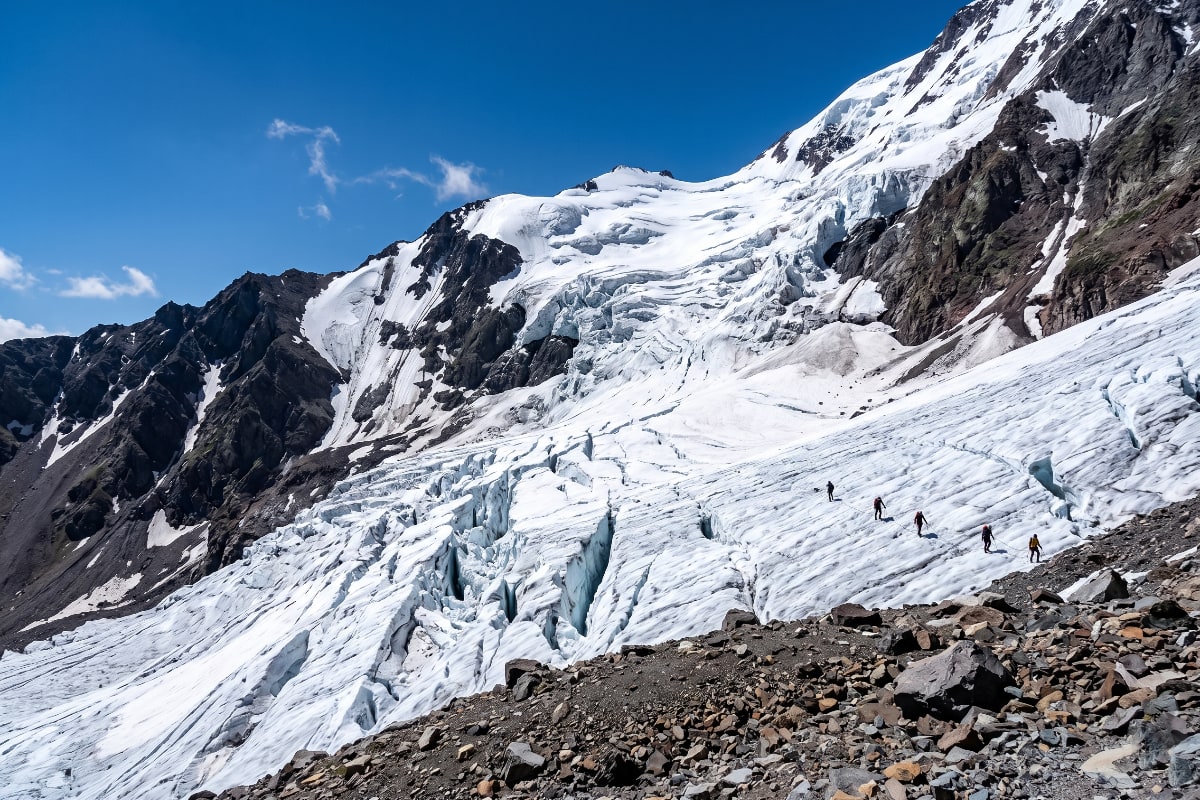
The Gergeti Glacier on Mount Kazbek is visible from the valley floor and reachable by trekkers with experience. The presence of active glaciation makes the landscape feel genuinely alpine and alive — you can hear meltwater streams running through the meadows at every altitude.
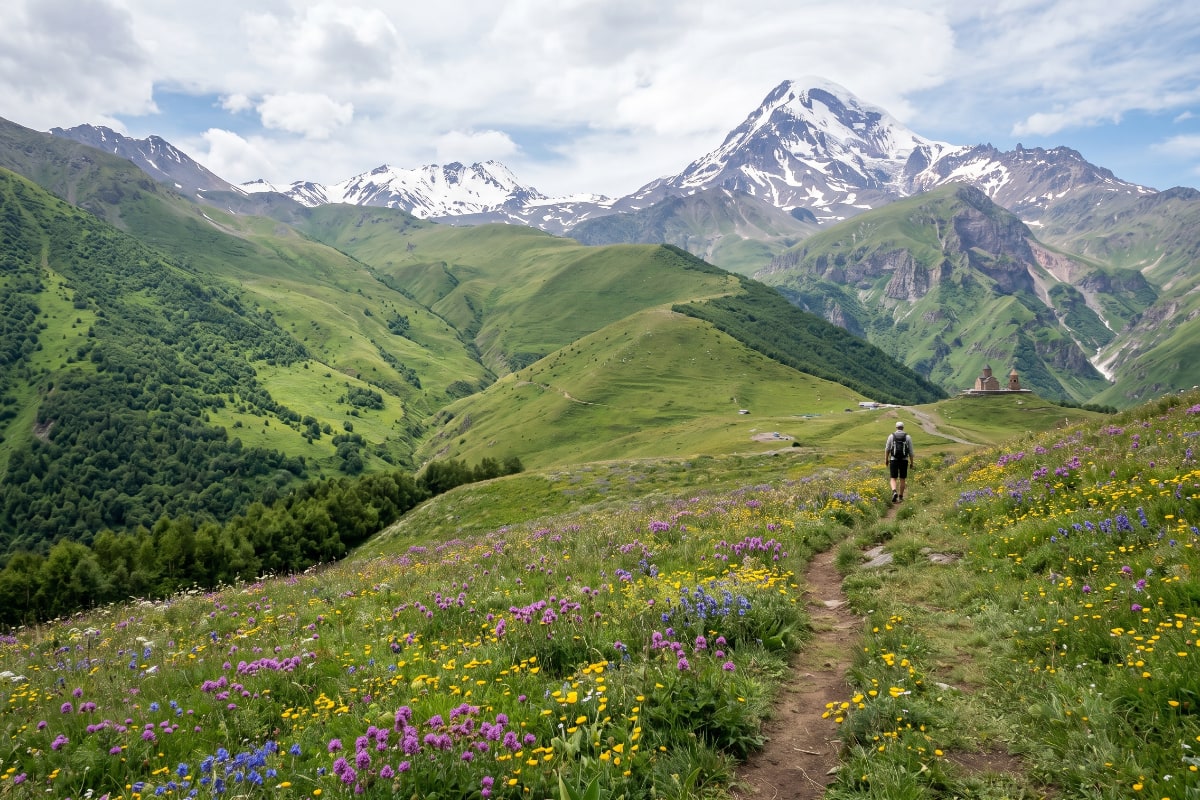
Between the treeline and the permanent snowfields lies a layer of subalpine meadow — open, grass-covered, and filled in summer with wildflowers, grazing horses, and the kind of quiet that only high altitude brings. These meadows are critical to the visual drama of Kazbegi and define the hiking experience.
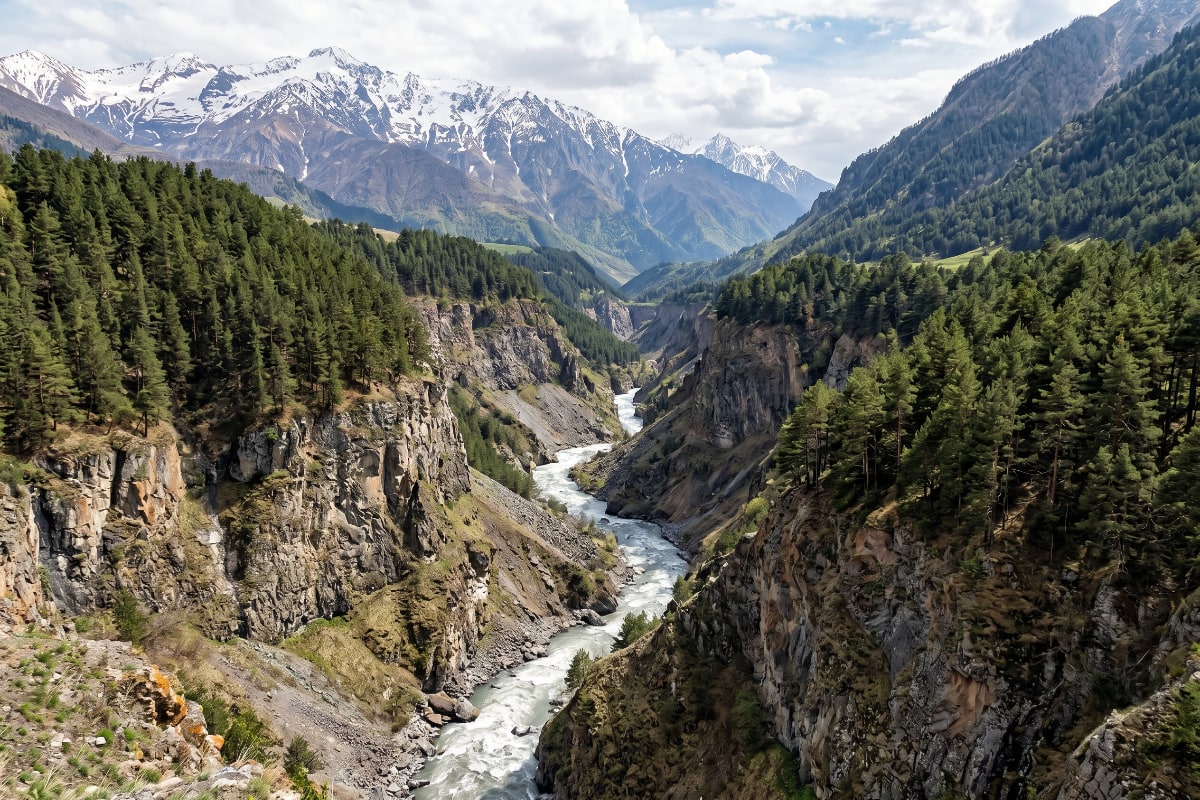
The lower valleys are rich with pine and birch forest. The Terek and its tributaries have cut narrow gorges over millennia, creating the dramatic approach routes — including Dariali Gorge — that visitors experience on the way in. The river is fast, cold, and constant in sound throughout the valley.
Orientation
The main valley is oriented roughly north-south, with Stepantsminda town in the centre and key attractions spreading to the northeast (Truso), southeast (Juta, Sno), and directly above (Gergeti).
Interactive Map
Embed Google Maps or Mapbox here — centered on Stepantsminda (42.6594° N, 44.6389° E)
Open in Google Maps ↗Local Culture
The Khevi region — of which Kazbegi is the heart — has historically been defined by its relative isolation. The mountains are not merely background scenery; they have shaped the people who live here over generations. Kazbegi communities are fiercely independent, deeply religious, and bound by codes of hospitality that still hold today.
The Georgian Orthodox faith is central to life here. Gergeti Trinity Church is not simply a tourist landmark — it is an active place of worship, attended by local communities on saints' days and for regular services. Spring festivals (particularly around Easter) are celebrated with processions up the mountain that are deeply moving to witness.
Kazbegi's food is honest and grounded in what the land provides. Dairy is central — fresh sulguni cheese, matsoni (yogurt), and clarified butter from cows grazed in the upper meadows. Bean soups, clay-oven bread, and smoked meats reflect a highland self-sufficiency. The best meals are served in family guesthouses, not restaurants.
Georgian (Kartuli) is the language of daily life. Russian is widely understood among older residents. English is spoken in tourist guesthouses and is increasingly common among younger Georgians in the region.
Georgia is one of the oldest Christian nations in the world. At churches and monasteries, modest dress is expected — cover shoulders and knees. Women may be offered a shawl at the entrance. Voices low, photography with discretion.
Georgian mountain hospitality (st'umartmaspindzloba) is genuine and generous. Accepting food when offered is a sign of respect. If invited into someone's home, accept — the experience will be one of the highlights of your trip.
How to Travel Here
The best way to experience Kazbegi is not to rush it. A few guiding principles from travelers who have done it well:
Day trips from Tbilisi are possible but give you a surface impression. With even one night in a local guesthouse, you see the mountain at dusk, at dawn, and in the clear early morning light — completely different experiences.
For Truso, Juta, and any route beyond the paved road, hire a local 4×4 and driver from town. These drivers know the routes, the conditions, and often the best stops. Rental cars are not suited for these routes.
Mountain weather in the Caucasus is changeable. Clouds can obscure the peak of Kazbek for entire days, then clear in minutes. Build flexibility into your plans. A partly cloudy morning sometimes gives way to the clearest afternoon imaginable.
After the morning hike or valley excursion, the best part of a Kazbegi day is simply being in the place. A coffee at a guesthouse terrace, a walk through the back streets of Stepantsminda, or sitting in a meadow watching the light change across the ridgeline — this is part of the experience.
Hikes, jeep tours, viewpoints, waterfalls, churches, and food — the full activity guide.
Explore →One day, a weekend, or a longer road trip — curated plans for every length of visit.
Plan →Getting there, best time to visit, weather, practical tips and transport notes.
Read →